
Guides
Authentic Moroccan Mint Tea: The Traditional Recipe (and Why It Isn't Really Peppermint)
If you searched for Moroccan peppermint tea, here's the first thing worth knowing: the real thing isn't made with peppermint at all. It's spearmint. That single swap is the difference between a tea that tastes sharp and cooling and one that tastes like an actual glass poured in Fez or Marrakech.
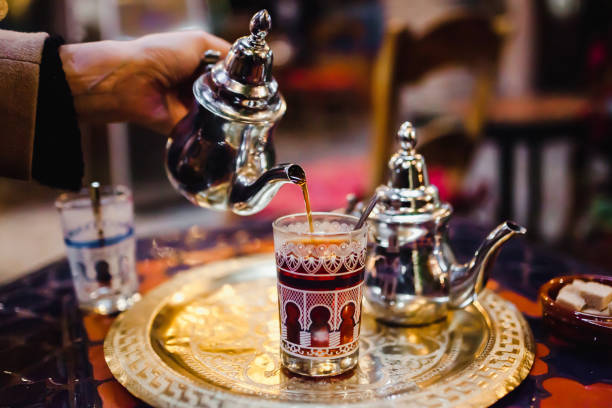
Moroccan mint tea — atay in Moroccan Arabic, or thé à la menthe — is more than a drink. It's how guests are welcomed, how deals are closed, and how afternoons pass. Making it well isn't complicated, but there's a technique to it, and once you understand the few steps that matter, you can make it properly at home.
Peppermint or spearmint?
Spearmint. Specifically the variety Moroccans call na'na, a soft, slightly sweet spearmint that grows all over the country. Peppermint has a much higher menthol content, which gives it that intense, almost medicinal cooling hit. It isn't bad — it's just not what Moroccan tea tastes like.
If peppermint is all you can find, you can use it, but use a little less and expect a cooler, sharper cup. For anything close to authentic, get fresh spearmint. A bunch labeled "Moroccan mint" at a good grocer or farmers market is usually a spearmint cultivar and works perfectly.
What you need
Makes about 4 to 6 small glasses. The quality of each ingredient shows up in the glass.
Ingredients
- Gunpowder green tea
1 heaping tablespoon of tightly rolled Chinese green tea pellets
- Fresh spearmint (na'na)
1 large handful, stems and all
- Water
3 to 4 cups, fresh
- Sugar
To taste — traditionally generous
Equipment
- Moroccan teapot (berrad)
Or any small pot you can heat on the stove
- Small tea glasses
Heat-proof, often decorated
A word on the tea. Use gunpowder green tea, not just any green tea. Gunpowder is Chinese green tea rolled into tight little pellets that unfurl as they steep. It holds up to boiling water, which most delicate green teas don't, and it gives the tea its backbone. Swapping in a random green tea bag will not give you the same result.
A word on the pot. A real berrad is metal — usually stainless steel or silver-plated — and there's a reason for that. The traditional method boils the tea directly on the flame, so the pot has to handle heat. A decorated ceramic pot looks beautiful but can crack on direct heat, so if that's what you have, brew in a small saucepan and pour into the pretty pot to serve. The long curved spout isn't just for show either — it's built for pouring from a height.
How to make it, step by step
- 1
Rinse the tea
Put the gunpowder tea in your pot and pour in a small splash of boiling water, just enough to cover the leaves. Swirl for a few seconds, then pour that water off and discard it. This washes away dust and some of the raw bitterness gunpowder can carry. Some families rinse twice, or reserve that very first splash in a glass and add it back later. Both are traditional; a single quick rinse is plenty when you're starting out.
- 2
Boil
Add 3 to 4 cups of fresh water to the pot and bring it up to a boil. Let it boil for a couple of minutes so the gunpowder really opens up and the tea gets strong. Don't rush this — weak base tea makes for a flat final cup.
- 3
Sweeten
Add the sugar now, while the tea is hot, so it dissolves fully. Start with 4 to 6 sugar cubes (or 2 to 3 tablespoons) for a pot this size and adjust from there. Yes, that's a lot by Western standards — it's supposed to be.
- 4
Add the mint
Stuff in a big handful of fresh spearmint, stems and all, and press it down into the hot tea. Let it steep for 3 to 5 minutes off the heat, or right at the edge of a simmer. The longer it sits, the more minty and slightly more bitter it gets, so taste as you go.
- 5
Mix by pouring
This is the part that separates a real glass from a lazy one, and you do it without a spoon. Pour a glassful of tea out of the pot from a height, then pour it straight back into the pot. Do this three or four times. It blends the sugar and mint evenly, aerates everything, cools the tea slightly, and builds the foam.
- 6
Pour and serve
Fill each glass by pouring from as high as you can manage without making a mess — six inches or more above the rim. Done right, a light foam forms on top of each glass. That foam is the sign of a well-made tea, and skipping the pour is why store-bought and rushed versions never quite have it. Serve hot, in small glasses, and expect people to want a second round.
About all that sugar
Authentic Moroccan tea is sweet, sometimes very sweet, and that's not a mistake or a sign of bad taste. In Morocco the sugar comes in hard cones you break apart with a little hammer, and a full cone can go into a single pot for guests. The sweetness balances the strength of the boiled gunpowder and the sharpness of the mint, and the three of them together are the whole point.
That said, this is your kitchen. If you want it lighter, start with less and add more — you can always sweeten a pot but you can't unsweeten it. Just know that if you cut the sugar way down, you're drinking a lighter, more Western version, not the traditional one.
Getting the foam right
The foam — some call it the crown — comes entirely from how you pour, not from any ingredient. If your glasses have no foam, you're either pouring from too low or pouring too gently. Raise the pot, commit to the pour, and let the tea fall in a steady stream. The first glass often has the most foam, and pouring the tea back and forth a few times before serving helps every glass get some.
How it's served
Tea in Morocco is an act of hospitality, poured for guests the moment they arrive and often several times over. It's usually made and poured by the host at the table, in front of everyone, which is part of the ritual.
There's a well-known North African saying, often tied to Tuareg tea culture in the Sahara, that a proper serving comes in three glasses: the first gentle, the second strong, and the third sweet, with the flavor shifting as the same leaves are brewed again. Versions of the saying vary from region to region, but the idea is the same. You don't drink one glass and walk away. You sit, and you stay a while.
Troubleshooting
It's too bitter.
Your base tea likely oversteeped, or you skipped the rinse. Rinse next time, and pull the mint out a little sooner.
It's weak and watery.
The gunpowder didn't boil long enough, or you used too little. Give it a proper boil and a full heaping tablespoon.
No foam.
You're pouring from too low. Raise the pot and pour back and forth a few times before serving.
It's cloudy.
Usually harmless — often just fine mint sediment. Straining as you pour into glasses helps if it bothers you.
Frequently asked questions
- Is Moroccan mint tea made with peppermint or spearmint?
- Spearmint. The Moroccan variety, na'na, is a soft, sweet spearmint. Peppermint has far more menthol and gives a sharper, cooler cup that isn't traditional. Use spearmint whenever you can.
- Does Moroccan mint tea have caffeine?
- Yes. The base is gunpowder green tea, so it contains a moderate amount of caffeine — less than coffee but enough to notice. The mint itself is caffeine-free.
- Can I make it without a Moroccan teapot?
- Absolutely. Brew in any small saucepan and pour into your favorite pot or straight into glasses. A traditional metal berrad is nice because it goes on direct heat and pours well, but it isn't required.
- How much sugar should I use?
- Traditionally a lot — around 4 to 6 cubes or 2 to 3 tablespoons for a small pot, and often more. Start on the lower end and adjust up. The tea is meant to be sweet.
- Can I use dried mint instead of fresh?
- Fresh is much better and gives that bright, clean flavor. Dried mint will work in a pinch but tastes flatter and more muted. If fresh spearmint is available, use it.
- What's the best tea to use?
- Gunpowder green tea. It's the standard base across Morocco and the Maghreb, it stands up to boiling, and it gives the tea its strength. Loose gunpowder is best.
- Can I reuse the leaves?
- Yes, and it's traditional. The same leaves are brewed for a second and third round, with each glass tasting a little different. Add a bit more fresh mint and sugar for later rounds.
Stock the ritual
Browse our wholesale Moroccan tea and hand-hammered brass teaware to bring the full atay experience to your customers.